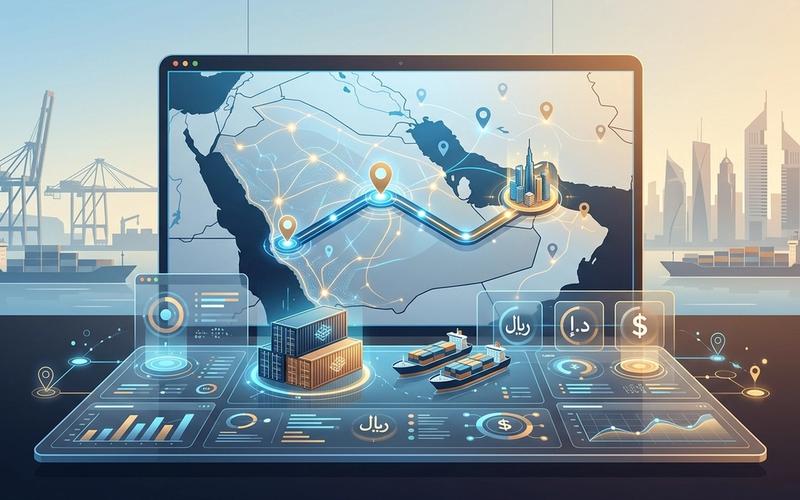
Multi-Branch Inventory & Currency Tracking: Operating Seamlessly Across Borders
Managing delivery networks across multiple hubs or countries introduces massive financial and physical inventory risks. Discover how isolated branch databases, multi-currency routing pipelines, and stock guards prevent operational cross-contamination.
By Islam Baraka
When a third-party logistics provider (3PL) or fulfillment company expands from a single regional town into a multi-city grid—or crosses international lines—their structural architecture faces a breaking point.
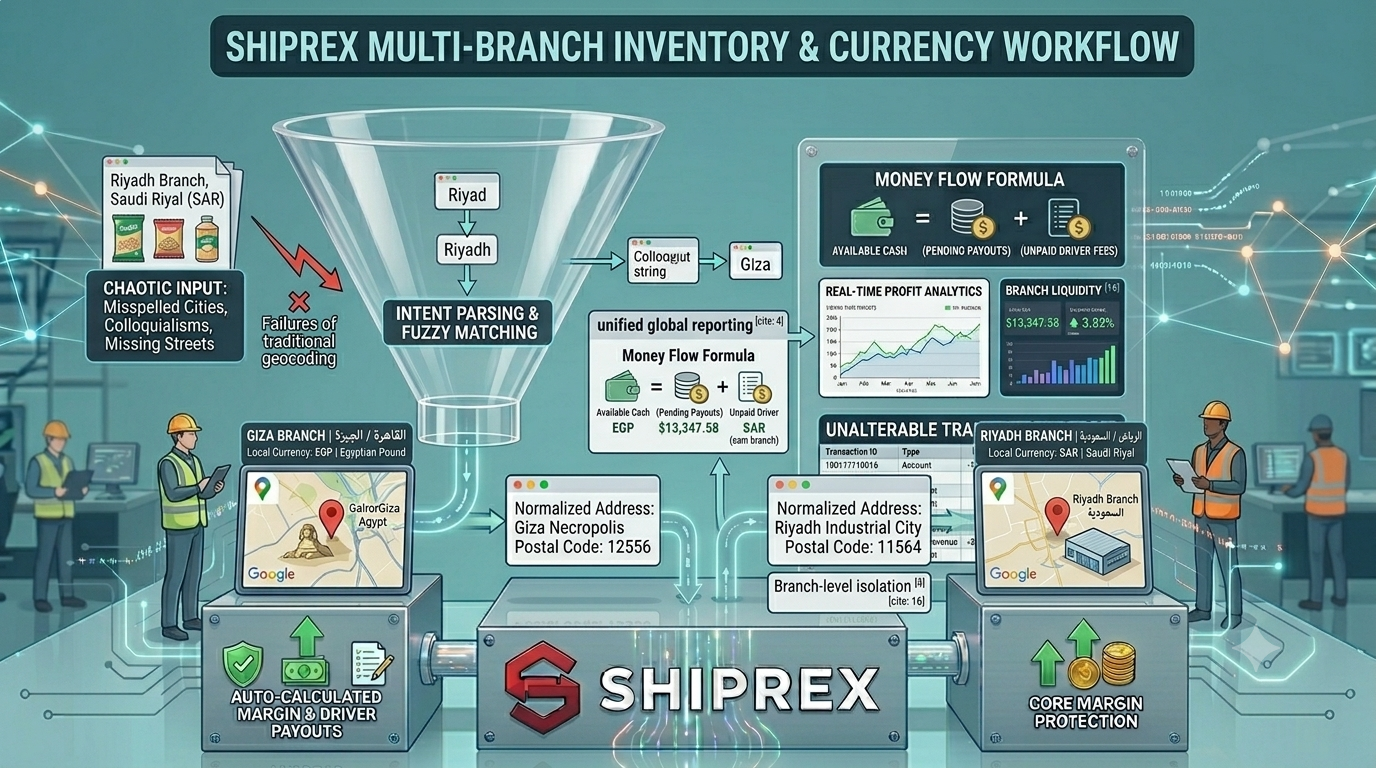
Managing separate corporate identities, disparate inventories, local bank accounts, and localized currencies (such as running a branch in Cairo in Egyptian Pounds while operating fulfillment centers in Riyadh in Saudi Riyals) cannot be handled by standard linear tracking systems.
Without deep architectural multi-tenancy, cross-contamination is inevitable. A regional dispatcher in one city might accidentally route a pickup using an incorrect currency ledger, or a warehouse manager could inadvertently allocate stock units belonging to a merchant company in an entirely different country.
The Complexity of Decentralized Supply Chains
To scale effectively, an enterprise delivery framework must move past basic user role-based permissions and implement isolation at the data-layer level. This means partitioning the execution environments so that each regional hub acts as an autonomous node while contributing to a single global back-office ledger.
The Mechanics of High-Volume Multi-Branch Systems
A scalable, modern logistics system addresses these international distribution challenges through four tightly integrated functional modules:
1. Multi-Currency Accounting Pipelines
When processing orders across borders, the financial framework must map transactions according to the localized context of the origin branch. This involves assigning specific default currencies per branch database row.
Every cash ledger entry, COD bank collection account, and driver wallet deduction must be calculated using the branch's native currency units, preventing dangerous exchange rate fluctuations from muddying the company's core corporate profit-and-loss reports.
2. Decentralized Inventory Control (Multi-Warehouse)
For systems deploying integrated stock management features, merchant inventory allocations must be bound directly to specific warehouse environments. When a customer places an order, the system evaluates the origin branch and applies hard data constraints:
- Stock In/Out Mutations: Inventory reductions or return restocking tasks are constrained specifically to the warehouse hosting that physical product line.
- The Negative-Stock Guard: The system monitors localized stock levels and actively blocks the processing of orders if the specific regional warehouse shows zero inventory, protecting the courier from wasting mileage dispatching unfulfillable requests.
3. Hierarchical User and Branch Groupings
Managing field operations requires isolating user visibility. By utilizing an advanced tenant management plugin, supervisors are assigned strictly to specific branch profiles.
An administrative user or dispatcher logged into the Jeddah branch dashboard can only see local delivery lines, local driver wallets, and local merchant company lists, removing interface clutter and safeguarding company data integrity across regional territories.
4. Unified Global Overview Reporting
While branches must function independently on the ground, executive oversight requires global visibility. Modern software bridges this gap by routing all isolated branch operations through a centralized status bus.
This enables top-level management to extract global cross-entity data—such as monitoring the system-wide Money Flow formula across all regional nodes concurrently—without compromising the day-to-day security and data independence of individual local hubs.
\text{Global Group Liquidity} = \sum (\text{Branch COD Bank Balances} - \text{Branch Pending Payouts} - \text{Branch Driver Fees})Securing True Operational Scale
Scaling an international shipping company requires software that adapts to regional complexities instead of ignoring them. By deploying an infrastructure that natively respects branch-level currencies, localized database siloing, and secure multi-tenant structures, logistics providers can comfortably grow their footprints—transforming regional complexity into a systematic, repeatable machine for global distribution.