Precision Shipping: Mapping Google Areas to Operational Zones
Coordinate addresses look great on screen, but logistics operations require logical pricing boxes. Discover how modern shipping ERPs bridge the gap between map APIs and operational zone hierarchies.
By Islam Baraka
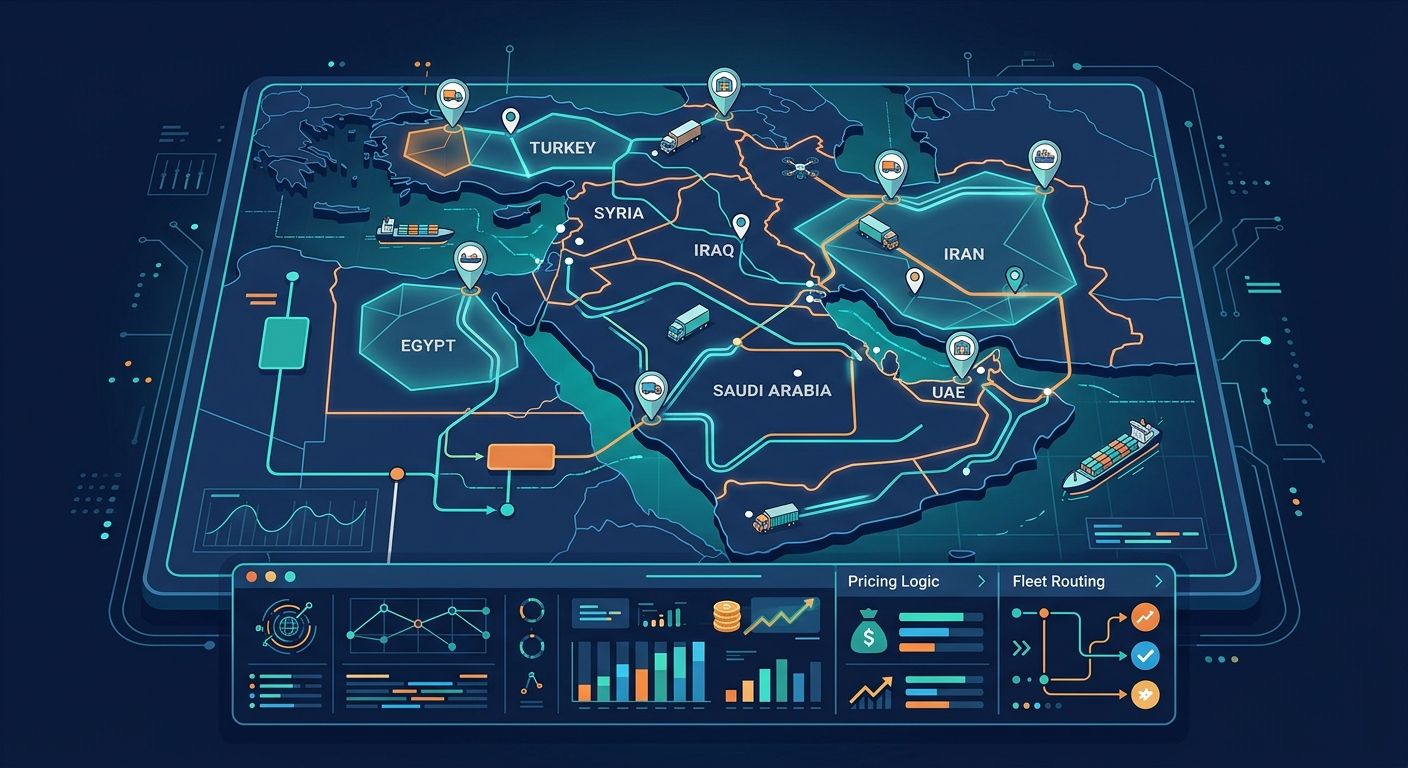
The Coordinate Trap: Why Lat/Long Isn't Enough
For modern logistics providers, pinpointing a customer's location using latitude and longitude is only the first step. A pin on Google Maps looks beautiful on a customer-facing tracking page, but to a dispatcher, a terminal manager, or a financial controller, that raw coordinate is operationally useless on its own.
In the real world of fleet management and regional logistics, shipping companies cannot price shipments or dispatch couriers based solely on raw coordinates. Operations require logical, structured boundaries. A delivery address in Riyadh's *Al-Malqa* district or Cairo's *New Cairo* needs to be instantly translated into a specific operational zone.
This is where the disconnect lies: Google Maps APIs provide geographical precision, but Shipping ERPs provide business logic. Bridging this gap is crucial for maintaining margin control, optimizing fleet routing, and ensuring seamless Cash on Delivery (COD) reconciliation.
---
The Solution: The Area-to-Zone Hierarchy
To bridge the gap between geographical coordinates and operational realities, advanced shipping ERPs utilize a structured Area-to-Zone Hierarchy. Instead of treating every coordinate as an isolated point, the system groups coordinates into logical "pricing and operational boxes."
Here is how the hierarchy works inside a modern shipping ERP:
- The Geo-Coordinate Layer: The ERP captures the exact latitude and longitude via Google Maps API during order creation.
- The Administrative Area: The coordinate is mapped to a standardized district or neighborhood name (e.g., *Al-Yasmin, Riyadh* or *Maadi, Cairo*).
- The Operational Zone: The ERP translates that district into a customized operational zone (e.g., *Zone A - Central Riyadh*, or *Zone C - Cairo Outskirts*).
By linking these layers, shipping companies can establish structured pricing matrices. If a delivery falls within *Zone A*, it carries a base rate. If it falls into a remote, hard-to-reach zone in Saudi Arabia's Western Province, the ERP automatically applies a remote-area surcharge.
---
How Shipping ERPs Execute This at an Operational Level
Shipping companies are leveraging enterprise logistics software to automate this mapping process at scale, eliminating manual dispatch errors and pricing leakage.
1. Dynamic Polygon Geofencing
Rather than relying on static postal codes—which are often unreliable or non-existent in parts of the GCC and Egypt—operations managers use their ERP to draw custom polygon geofences directly onto the map.
When a new order enters the system, the ERP's geocoding engine checks which polygon the coordinate falls into. The system then automatically assigns the order to the correct hub, route, and courier, ensuring that drivers are only assigned shipments within their designated territory.
2. Automated Pricing Matrix Integration
Manually calculating shipping rates based on address descriptions is a major source of revenue leakage. With an integrated shipping ERP, the moment an address is geocoded and assigned to an operational zone, the system references the client's contract matrix.
Whether it is a flat-rate delivery in central Dubai or a COD-heavy delivery requiring multiple attempts in Giza, the ERP calculates the exact cost, fuel surcharges, and COD collection fees before the driver even leaves the warehouse.
3. Streamlined Fleet Management and Dispatching
By converting raw map data into operational zones, fleet managers can balance driver workloads effectively. Instead of having multiple drivers cross paths, the ERP groups shipments within the same operational polygon. This reduces fuel consumption, maximizes drops per hour, and ensures that tight SLAs are met consistently.
---
The MENA Context: Navigating KSA, UAE, and Egypt
Applying this level of operational control is especially critical in the MENA region, where address formatting varies widely:
- Saudi Arabia (KSA): Vast geographical distances between major hubs like Riyadh, Jeddah, and Dammam require strict zone-based pricing. Shipments to remote villages (*Hejr*) must be automatically routed to sub-contractors or specialized long-haul fleets, with pricing adjusted dynamically.
- Egypt: High urban density in Cairo and Alexandria, combined with informal address systems, makes polygon geofencing essential. Mapping complex neighborhoods into defined operational zones prevents drivers from getting stuck in overlapping territories.
- United Arab Emirates (UAE): Highly structured free zones and master communities (like JLT or Marina in Dubai) require precise operational zoning to account for high-rise delivery times and specific parking constraints.
---
Transitioning to Logic-Driven Logistics
Relying on raw map coordinates without an operational overlay leads to inefficient routing, pricing errors, and chaotic dispatching. By implementing a robust shipping ERP like Shiprex, logistics providers can seamlessly link advanced map APIs with defined area-to-zone hierarchies.
This integration turns visual maps into actionable business logic, protecting your margins, empowering your drivers, and delivering a superior experience to your customers across the MENA region.