How Do I Start a Shipping Company in the MENA Region?
Thinking about starting a shipping business in Egypt, KSA, or the UAE? Here is the honest, step-by-step blueprint from someone who has built and scaled regional logistics from scratch.
By Islam Baraka
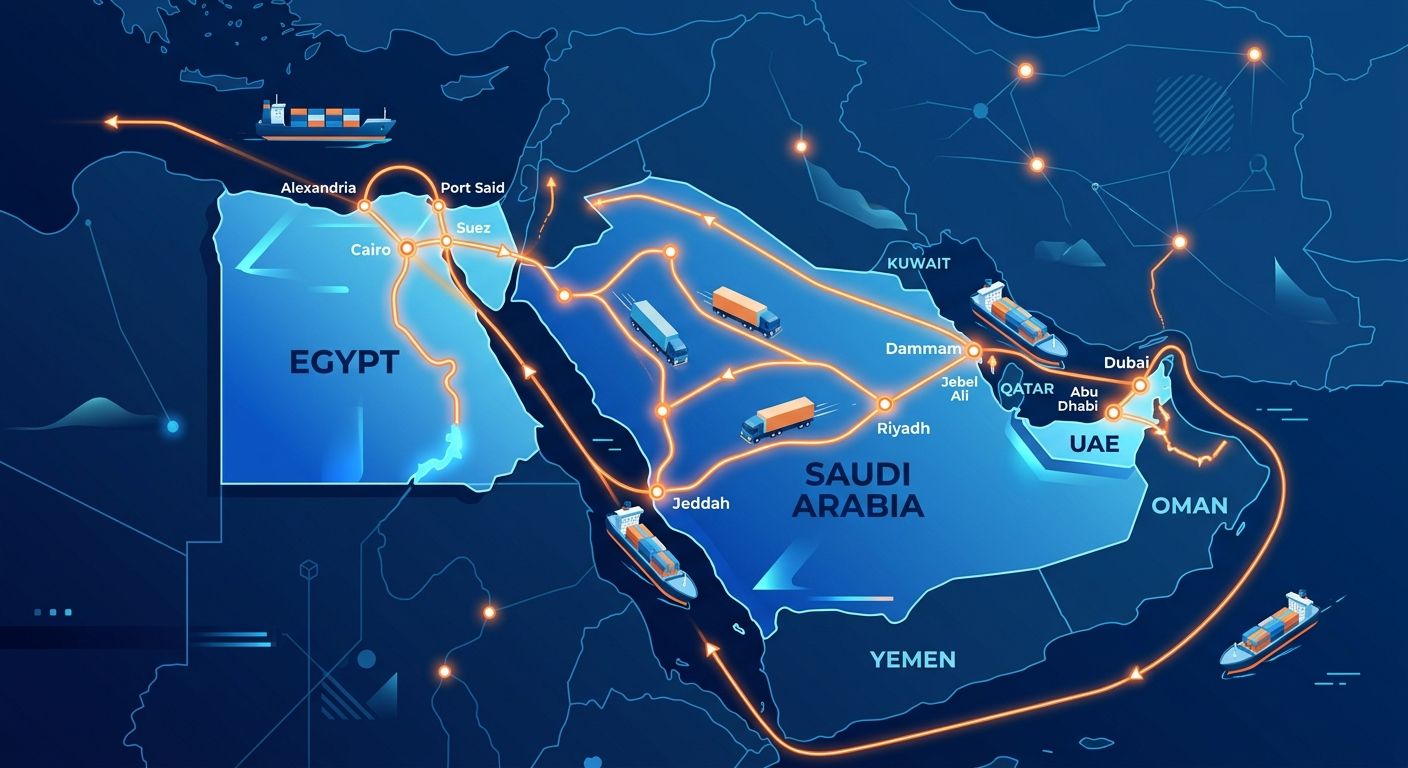
Should You Start with Domestic or International Shipping?
In my experience, deciding whether to focus on domestic delivery or cross-border shipping is your very first critical crossroad. I often see eager managers trying to conquer both from day one, but that is a recipe for operational failure.
Here is how the two paths stack up in the real world:
- Domestic Shipping: Demands hyper-local speed, high route density, and a reliable delivery management system to handle high-volume last-mile routing. You must manage drivers closely and handle cash-on-delivery (COD) with absolute precision.
- International Shipping: Requires complex customs clearance expertise, multi-modal freight coordination, and global agent networks, but operates with fewer daily touchpoints per shipment.
What I learned the hard way is that trying to build both models simultaneously on day one drains your capital faster than you can scale. If you choose domestic, your success hinges on automating your dispatch and tracking. Without a robust shipping ERP software or specialized tools like courier software UAE or a shipping management system KSA, your team will drown in manual coordination.
Here is what most managers miss: the operational workflows for international freight and domestic COD are completely different beasts. Pick one core strength, master it using a powerful logistics ERP MENA or 3PL software Egypt, and only then expand.
Legal Paperwork and Licensing Across the MENA Region
In my experience, many founders fail before their first delivery van even starts its engine, simply because they treated legal compliance as an afterthought. Let me be blunt: licensing requirements for setting up a logistics business vary drastically depending on your geographic scope. What works for a local last-mile courier in Cairo won't fly if you are looking to secure a courier software UAE license or set up cross-border operations. What I learned the hard way is that trying to cut corners on legal paperwork to save on the initial setup cost will eventually cost you ten times more in fines, or worse, get your operations shut down completely.
If you are targeting the Gulf, for example, getting a shipping management system KSA compliant operation or obtaining a courier software UAE approved license requires strict adherence to local transport authorities (like the TGA in Saudi Arabia or the RTA in Dubai) and putting up substantial financial guarantees. Meanwhile, if you are setting up a 3PL software Egypt based operation, the regulatory landscape demands deep coordination with national postal authorities and local ministries. To protect your startup from crippling penalties, you must thoroughly understand these mandatory legal requirements, securing your commercial registry, tax cards, and certified agency approvals before launching your first shipment.
Here is what most managers miss: your legal compliance isn't just about government paperwork; it is deeply tied to your technology. When you scale, your logistics ERP MENA system must align with local tax regulations (like ZATCA e-invoicing in KSA). I always advise my teams to implement a robust shipping ERP software or a comprehensive delivery management system from day one. It doesn't just manage your fleet; it acts as your digital audit trail, ensuring that every manifest, invoice, and driver record is legally compliant and ready for inspection.
Where Should You Launch? Comparing Egypt, Saudi Arabia, and the UAE
In my experience, thinking of the MENA region as a single, homogenous market is the fastest way to burn through your seed capital. What I learned the hard way running operations across Cairo, Riyadh, and Dubai is that each country requires a completely different operational playbook. You cannot copy-paste your strategy; you must adapt to the local friction points.
If you are looking at Egypt, you are dealing with massive population density and a market that still heavily relies on cash. When setting up a 3PL software Egypt operation, your biggest hurdle isn't just routing; it’s cash-on-delivery (COD) reconciliation. To succeed, you need a highly adaptable delivery management system that can track cash in real-time, manage driver wallets, and handle high-volume, low-margin orders without losing track of a single Egyptian Pound.
Now, let’s talk about Saudi Arabia. Entering the Kingdom is incredibly lucrative, but the regulatory landscape is tight. To secure your position, you must integrate directly with the General Transport Authority (TGA) and other mandatory government platforms. This isn't optional. If you don't have a robust shipping management system KSA compliant, you won't even pass the initial audit. In KSA, compliance is your license to play, meaning your logistics ERP MENA must support automatic API integrations with local regulatory bodies right out of the box.
Finally, the UAE is a different beast altogether. Here, it’s not about managing cash or navigating bureaucracy; it’s about sheer speed and flawless execution. Customers expect ultra-fast, sometimes sub-hourly, delivery. To survive, you must deploy an advanced courier software UAE standard from day one. You are competing with global giants, so your operational standards must be world-class. This is where a unified shipping ERP software becomes your secret weapon, automating dispatch, route optimization, and client communications seamlessly.
The True Cost of Starting and Managing Cash Flow
When you are planning your market entry—whether you are setting up a specialized courier software UAE to handle local last-mile deliveries or configuring a shipping management system KSA to manage cross-border lanes—most managers focus on the obvious. They calculate warehouse rent, vehicle leases, and licensing fees. But in my experience, the silent killer of new logistics setups isn't the upfront capital; it is the working capital cycle.
What I learned the hard way in my early operational days is that managing cash flow without a dedicated shipping ERP software is a recipe for disaster. If you are launching with a 3PL software Egypt setup or navigating a complex logistics ERP MENA framework, you will quickly realize that delayed Cash on Delivery (COD) reconciliation eats your liquidity alive. You cannot pay your drivers, settle customs duties, or buy fuel with "pending" balances that are stuck in reconciliation loops.
Here is what most managers miss: you are not just a delivery company; you are a financial intermediary holding cash for your merchants. My advice to you as a former manager who has been in your shoes is to allocate a solid cash runway of at least six months to cover payroll and fuel, and back it up with a modern delivery management system from day one. This ensures you track every single cent in real-time, keeping your operations liquid and your merchants trusting you.
How Do I Build a Fleet and Driver Management System That Actually Scales?
In my experience running some of the largest fleets in the region, I learned the hard way that your drivers are not just couriers—they are the living, breathing face of your brand. When you are looking into how to scale, whether you are deploying a delivery management system or setting up local operations, your success hinges entirely on how you manage the field. If your drivers are unprofessional or delayed, that is the exact impression the end customer gets of your entire operation.
What most managers miss when they first start out is the sheer chaos of manual tracking. Without a robust shipping ERP software, you will find yourself blind to the reality of the streets. You cannot accurately track driver routes, verify fuel efficiency, or calculate actual delivery success rates on WhatsApp and spreadsheets. If you are scaling a business, utilizing a localized shipping management system KSA or dedicated courier software UAE is not a luxury; it is the baseline requirement to stop cash and time from leaking out of your business.
Here is what I always tell new operations managers: the secret to driver retention and high delivery rates is a fair, transparent incentive structure. Do not just pay a flat rate. Instead, use your logistics ERP MENA to build a system that rewards drivers based on:
- Successful delivery rates (First-time delivery success)
- Minimizing cash-on-delivery (COD) discrepancies
- Reducing return rates (RTO)
By tying their performance directly to real-time data from your 3PL software Egypt or regional ERP, you align their wallet with your business goals. That is how you turn a chaotic fleet into a self-optimizing machine.
Building Your Tech Stack: Why You Need an ERP from Day One
When I first started running larger logistics operations, I made a mistake that almost cost us our biggest e-commerce client. I thought we could get by with basic spreadsheets and manual tracking for the first six months to save on upfront costs. What I learned the hard way is that spreadsheets don't scale; they break the moment you hit fifty orders a day. If you want to survive the brutal margins of the Middle East market, you cannot manage complex operations with manual workarounds. You need a dedicated delivery management system from day one.
Investing early in a modern shipping ERP software isn't a luxury—it's your operational foundation. In my experience, a robust logistics ERP MENA platforms offer will completely transform your daily workflow by handling the critical tasks that scale your business:
- Automated Order Ingestion: Seamlessly pull orders from your merchants' Shopify, WooCommerce, or custom stores without manual data entry.
- Smart Dispatching: Automatically assign parcels to the right drivers based on their zones, reducing idle time and fuel costs.
- Real-Time Tracking: Keep both your team and your end-customers updated with instant status changes, drastically reducing "where is my order?" calls.
Whether you are setting up a specialized courier software UAE system for rapid city deliveries, or deploying a comprehensive shipping management system KSA merchants demand for high-volume cash-on-delivery (COD) cycles, automation keeps your errors near zero. What most managers miss is that your tech stack isn't just an internal tool; it is your primary sales pitch to merchants. When you utilize advanced 3PL software Egypt or regional ERPs provide, you facilitate better operational decisions based on accurate, continuously updated performance reports, turning your shipping company into an indispensable strategic partner.