Guardrails in Motion: Implementing Capacity Limits and Archival Filters for Last-Mile Fleets
Operational fatigue and cluttered mobile interfaces are the hidden triggers behind high delivery failure rates. Discover how enforcing hard volume thresholds and automated workspace filtering keeps drivers focused, reduces doorstep errors, and stabilizes delivery performance.
By Islam Baraka
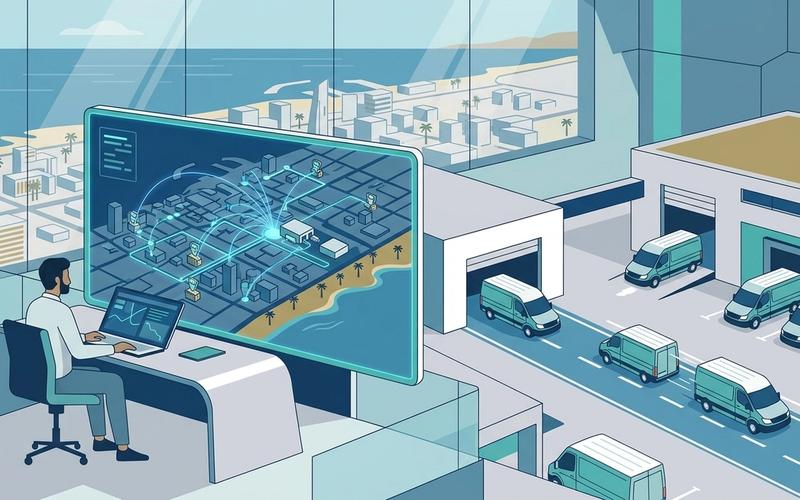
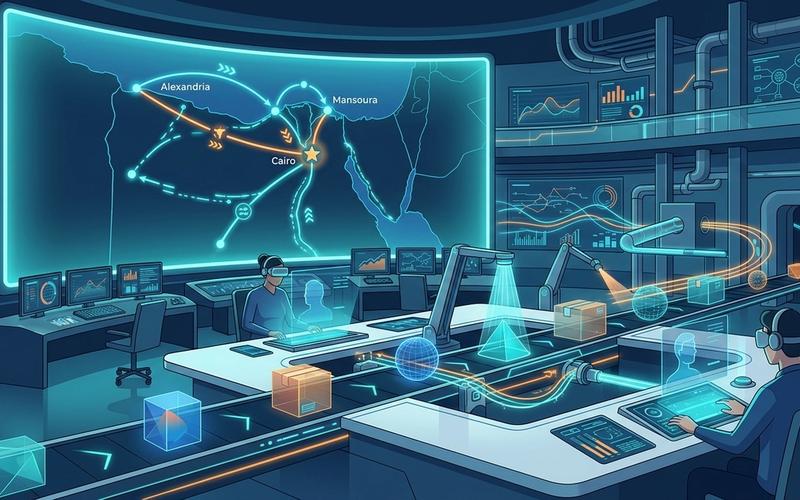
For a logistics operations manager, managing a last-mile delivery fleet is a continuous balancing act between volume and execution quality. On high-density delivery days, the temptation to load as many packages as possible into a single courier's vehicle is high.
However, overloading routes triggers a compounding operational drop: driver fatigue climbs, the rate of wrong address entry increases, Cash on Delivery (COD) cashbag errors occur, and packages are pushed to the next day, resulting in a high volume of delivery delays.
Furthermore, when drivers open their mobile applications only to be met with an unfiltered, endless backlog of completed orders, device performance drops and visual clutter leads to confusion.
To maintain clear operational control on the ground, logistics managers must implement structured, automated boundaries built directly into the data engine.
The Danger of Manual Load Distribution
Most traditional shipping companies rely on dispatchers to manually estimate how many packages a driver can handle in a single day. This approach leaves your margins vulnerable to human error. A dispatcher might assign 80 heavy, multi-item cartons to a driver assigned to a high-traffic metro sector, while another courier receives 20 lightweight flyers for a low-congestion suburban zone.
Without standardized system constraints, your fleet burns extra fuel, delivery windows are missed, and courier turnover increases due to burnout.
The Mechanics of Fleet Optimization Modules
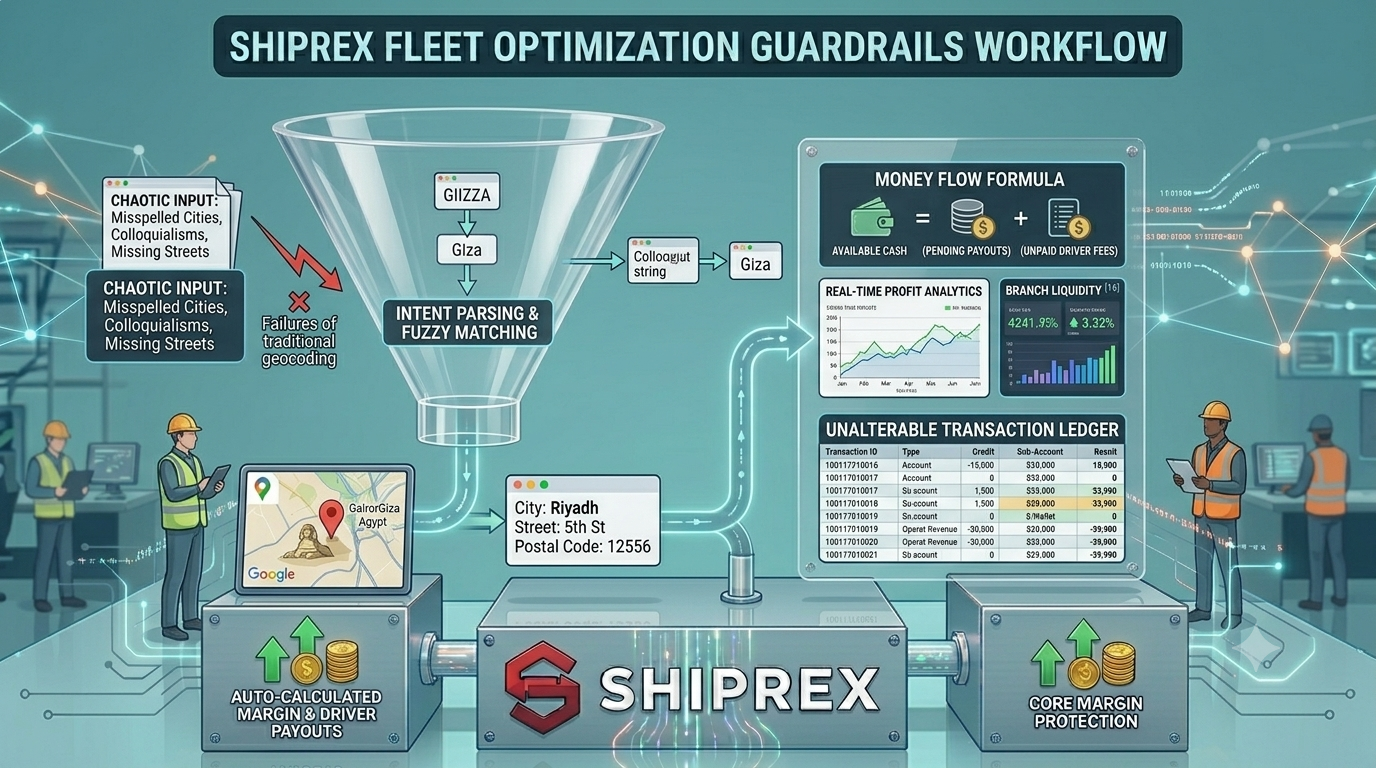
Modern, operational-first shipping systems resolve these frontline frictions by embedding automated capacity rules and user-interface safety valves into the core runtime model. In Shiprex, this manifests as a tightly integrated, role-aware operational workflow that bridges the gap between back-office dispatchers and couriers on the road.
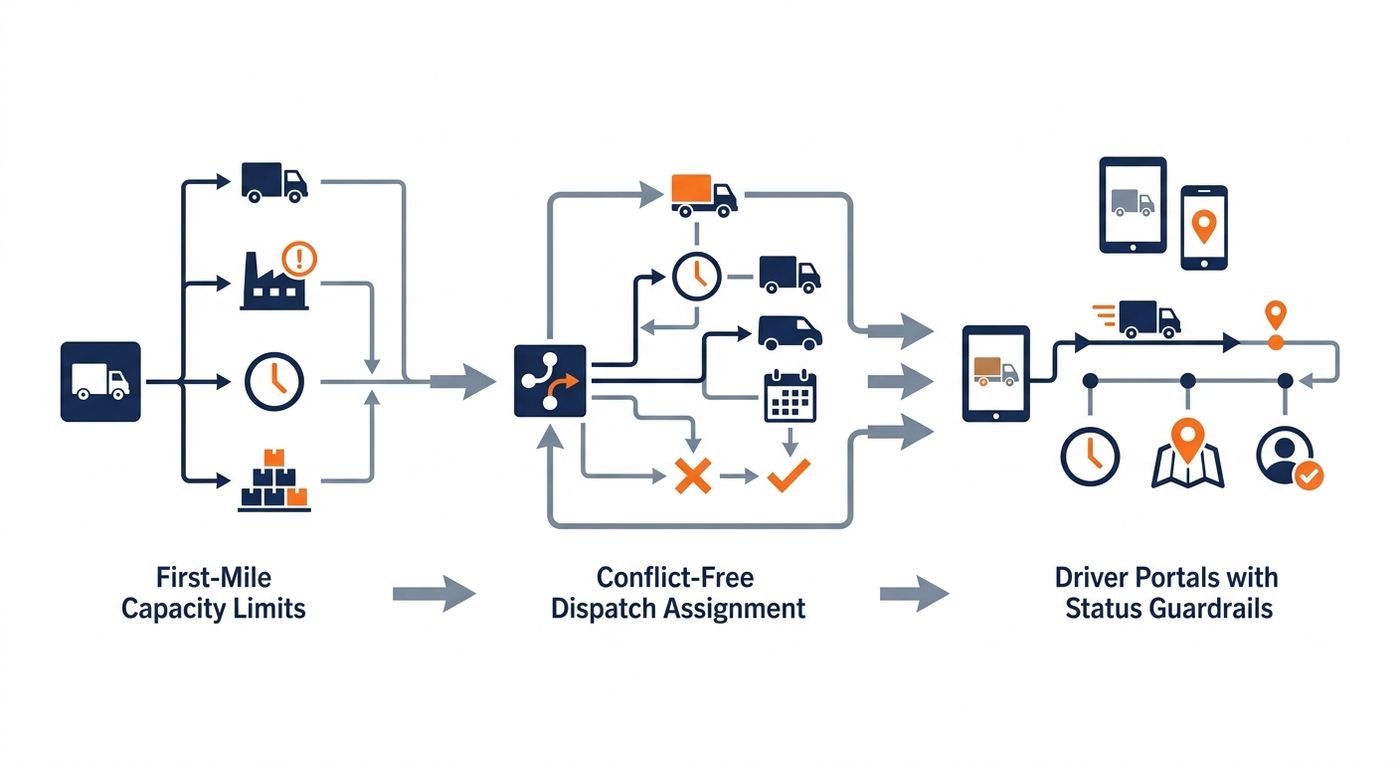
Controlled Driver Portals and Status Guardrails
In last-mile logistics, giving field staff unrestricted administrative control over order states leads to operational chaos and financial leakage. Shiprex resolves this by routing field operations through a dedicated, mobile-friendly online portal. Drivers see only the specific deliveries and pickups assigned to them, keeping their focus on the immediate run.
To protect cash flow and data integrity, the system utilizes strict status guardrails. While drivers can update operational milestones in the field—such as marking a parcel as "Delivered" or "Returned to warehouse"—they can be barred from executing sensitive financial transitions, such as marking an order as "Collected" (the terminal state that triggers final cash-on-delivery reconciliation). This safety valve ensures that financial closure remains exclusively in the hands of the back-office finance team.
Conflict-Free Dispatch and Assignment Rules
A common friction in busy shipping hubs is double-assignment, where two drivers believe they are responsible for the same parcel. Shiprex eliminates this by enforcing strict assignment rules: the moment an order is reassigned to a new driver, the system automatically unassigns the previous driver.
Additionally, operations managers can configure the dispatch queue to only display orders of a specific status, preventing staff from assigning orders that are not yet physically ready for the road. For high-volume days, managers can delegate bulk driver assignment permissions to junior staff while keeping sensitive financial settings, like cash-on-delivery and delivery fee modifications, locked down.
First-Mile Capacity Management
Fleet optimization starts at the first mile. Shiprex allows merchants to self-serve by booking their own pickup requests directly, but protects the courier's fleet capacity through automated scheduling rules. Operators can enforce daily pickup limits per merchant, weekend restrictions, and minimum lead-time windows to prevent unexpected surges.
Once booked, first-mile collections can be auto-assigned to drivers based on their maximum daily pickup capacity and a defined geographic radius. This prevents driver burnout and ensures collections are routed to the nearest available courier, reducing transit times and fuel costs.
Delegation for Overflow and Out-of-Network Shipments
When order volumes exceed fleet capacity or a delivery falls outside the courier's geographic zone, Shiprex provides an elegant capacity release valve: partner delegation. Operations managers can hand off shipments to partner carriers or sub-contractors. The system automatically updates the order status to reflect the hand-off, stamps the partner's details and the hand-off date directly onto the order history, and maintains full visibility of the package even when it is out of the primary fleet's hands.
1. Hard Dynamic Volume Thresholds
Instead of trusting manual calculations, the system enforces capacity rules directly at the driver profile layer. When a dispatcher attempts to assign an order—whether individually or via a bulk action—the engine runs a validation script against the driver record:
If the threshold is breached, the database blocks the update and returns a clean warning note. This mechanism ensures that couriers only receive loads that align with their vehicle capacity and localized route conditions, protecting your fleet metrics from dropping due to over-allocation.
2. Automated Workspace Archival Filtering (Hiding Completed Orders)
A common cause of mobile application latency and on-the-road confusion is data bloat. If a driver's manifest displays every package they have delivered over the past month, locating a high-priority order during a busy delivery run becomes difficult.
To solve this, advanced delivery networks configure automated workspace filters. The second a package status mutates into a definitive state—such as Delivered, Collected, or Terminated—it triggers a backend hook that filters the record out of the active driver dashboard view while preserving the complete history inside the central accountant workspace.
3. Role-Based Status Modification Frameworks
Frontline staff require clear boundaries regarding what data they can modify. While a driver must be able to move an order from On route to Delivered or trigger a partial delivery script, allowing them to adjust core financial components—like total package COD or base shipping fees—creates massive compliance vulnerability.
By separating status permissions, fleet supervisors can empower drivers to manage transit variables while securing the company's underlying general ledger data.
Maximizing Ground Efficiency Through Automation
Transitioning from manual oversight to automated system guardrails changes the daily workflow of your dispatch team. Fleet managers shift away from micro-managing individual driver manifests and move toward monitoring macro-level metrics, such as overall transit times, pickup completion rates, and regional cash-bag reconciliation speed.
By combining volume safeguards with clean mobile interfaces, your company builds an operational framework that minimizes error rates, protects asset health, and provides a premium, predictable delivery experience for your merchants.