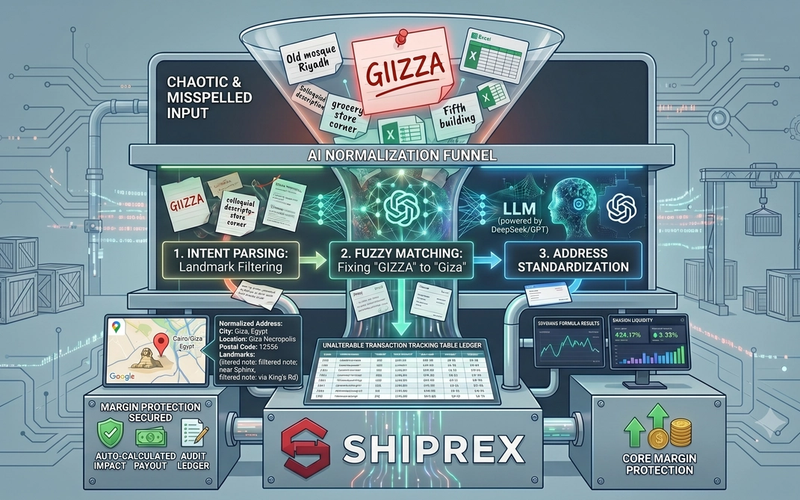
Mass Operations at Scale: The Mission-Critical Role of Bulk Actions in Logistics ERPs
Updating thousands of packages individually causes human error and creates severe dispatch bottlenecks. Discover how advanced logistics ERPs execute high-velocity bulk status mutations and financial updates safely through granular sub-permissions.
By Islam Baraka
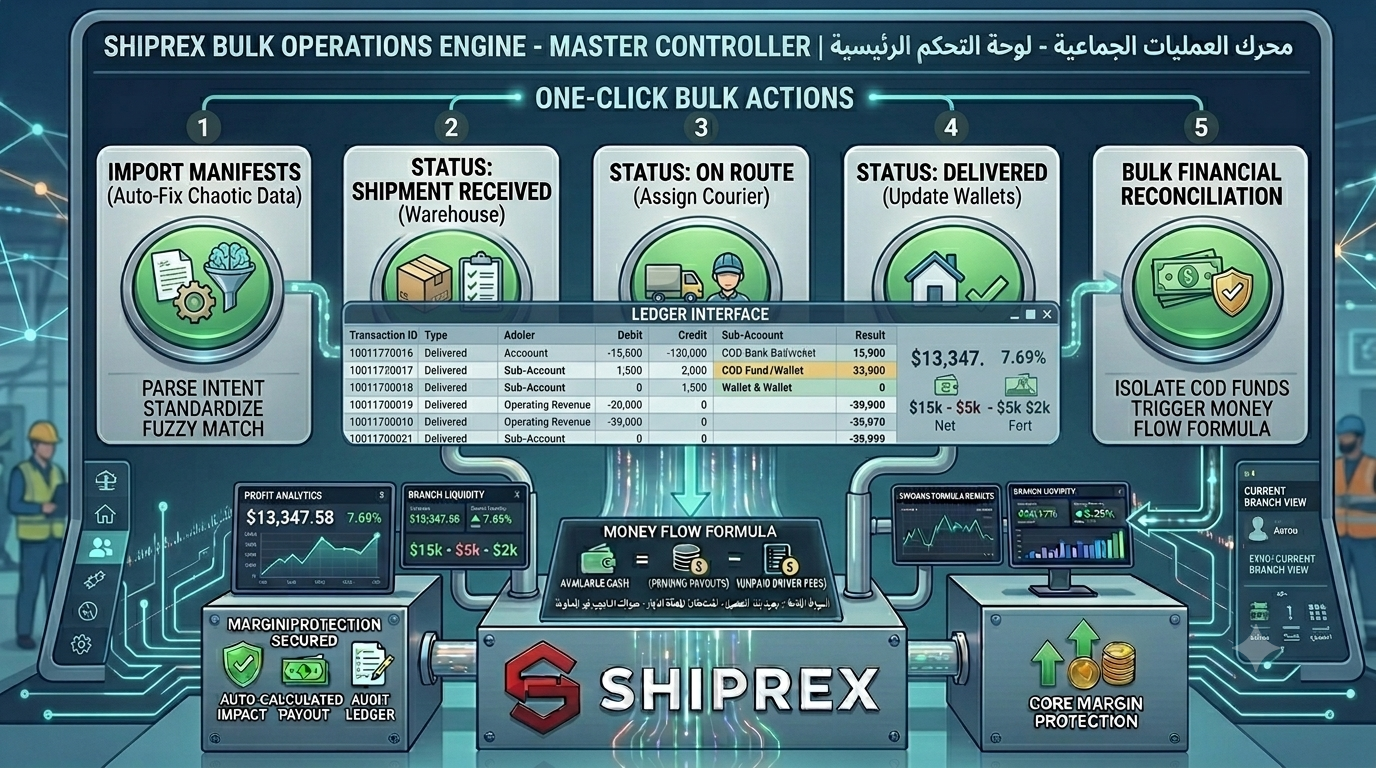
In high-volume third-party logistics (3PL) operations, efficiency is measured by how effectively your team handles repetitive tasks. When a regional distribution center receives a container holding 2,000 packages, updating those records one by one via a digital dashboard is not an option.
Forcing operational staff to click through individual order profiles to update a status code, assign a delivery courier, or adjust Cash on Delivery (COD) collection fees introduces massive human error risks and slows down dispatch lines.
To maintain clear operational velocity, modern enterprise shipping platforms must feature specialized Bulk Action Engines.
However, running mass updates across a live database is a delicate balancing act. Altering thousands of database rows concurrently can trigger system latency or create severe financial security vulnerabilities if your system fails to implement granular security guardrails.
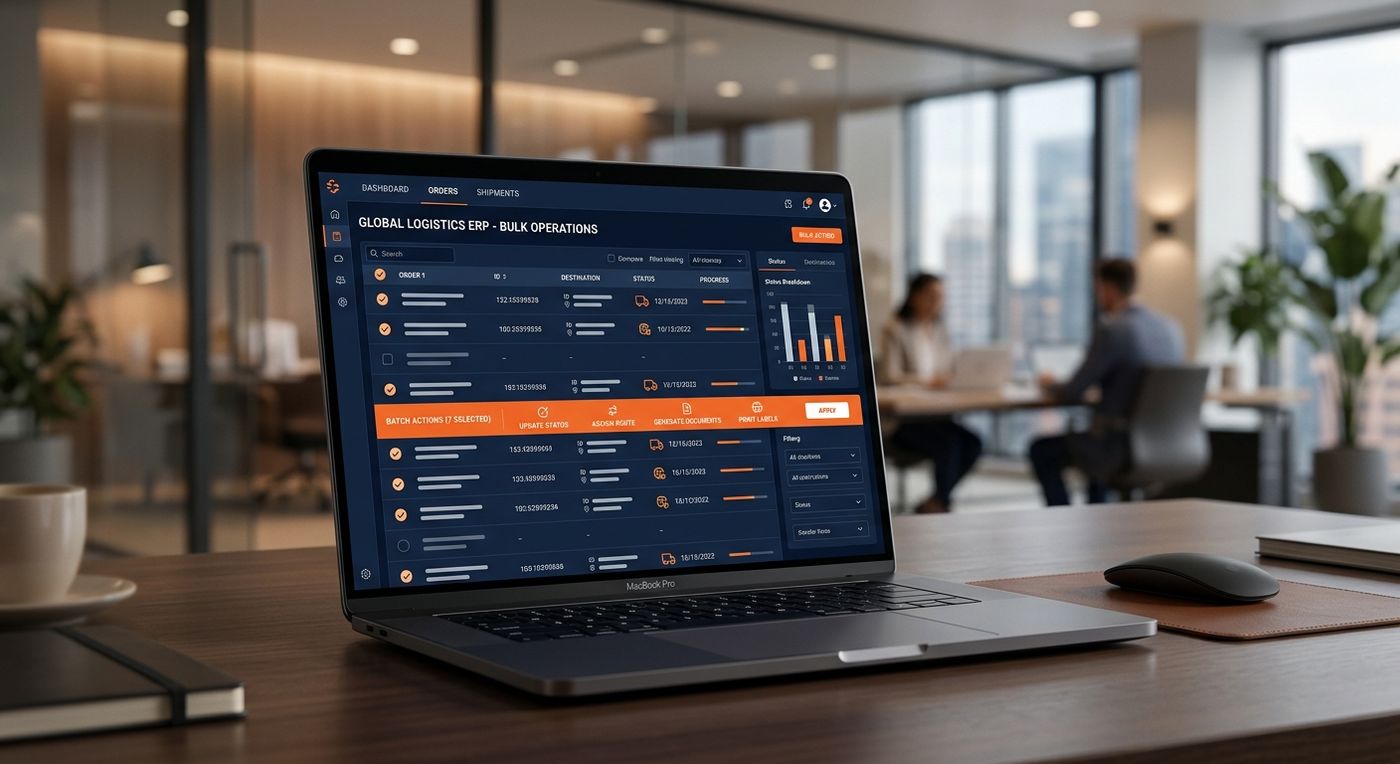
The Bottlenecks of Linear Data Management
Traditional shipping tools treat every order record as an isolated, static asset. While this linear database architecture works adequately for low-volume regional fleets running a few dozen deliveries a day, it fundamentally collapses under the weight of enterprise e-commerce workloads, cross-border GCC trade, and high-volume last-mile operations.
When your logistics software forces operators to open, edit, and save shipments one by one, your entire dispatch office becomes a bottleneck. Without specialized, multi-threaded mass processing capabilities, growing MENA logistics providers face three critical operational failures:
1. Operational Paralysis in Last-Mile Status Transitions
In high-volume last-mile hubs—such as those in Riyadh, Dubai, or Cairo—hundreds of packages must transition from "In-Warehouse" to "Out-for-Delivery" within a tight two-hour morning window.
- The Linear Bottleneck: Supervisors are forced to manually scan individual waybills or click through multiple confirmation screens to assign shipments to specific couriers. If a driver’s vehicle breaks down, reassigning those 80 packages to an alternate courier requires 80 individual record updates.
- The Business Impact: Drivers leave the hub late, missing their delivery windows. This delay cascades into missed SLAs, increased customer complaints, and a spike in expensive Return-to-Origin (RTO) rates because customers are no longer home to receive their cash-on-delivery (COD) orders.
2. Financial Drift and COD Reconciliation Failures
In the MENA region, where COD remains a dominant payment method, financial accuracy is non-negotiable. Shipping fees, fuel surcharges, and merchant-specific volume discounts are highly dynamic.
- The Linear Bottleneck: When a merchant renegotiates a volume discount mid-month, or when a sudden fuel price adjustment occurs, billing teams must retroactively apply these changes. In a legacy, linear system, modifying the delivery fees or COD metrics across 1,500 active orders requires line-by-line manual edits.
- The Business Impact: Human data-entry errors are inevitable. A single misplaced decimal point or missed row during a manual update introduces severe balance mismatches. This leads to friction during weekly merchant payouts, delayed cash flow, and hours of wasted administrative labor spent auditing discrepancies that should have been resolved programmatically.
3. Address Fragmentation and Route Allocation Stagnation
MENA logistics providers frequently deal with unstructured physical addresses. Customers often provide landmarks or WhatsApp pins instead of standardized postal codes, requiring manual verification before dispatch.
- The Linear Bottleneck: Legacy systems isolate the address verification step. Dispatchers must open each order, cross-reference the customer’s notes with geographic zones, and manually assign the correct sector code. There is no way to bulk-apply geographical rules (e.g., "Assign all orders containing 'Al-Malaz' to Riyadh Zone 4").
- The Business Impact: Dispatch offices must scale their headcount linearly with order volume just to handle data clean-up. Instead of managing exceptions, your highly paid operations managers spend their shifts performing repetitive, low-value data entry.
The Architecture of Secure Bulk Action Engines
Advanced shipping enterprise resource planning (ERP) systems handle high-velocity mass modifications by deploying optimized processing pipelines backed by granular security layers:
1. Non-Admin Sub-Permission Frameworks
Giving dispatch supervisors the power to modify thousands of orders at once is necessary, but giving them full administrative access over corporate financials is a massive security risk. Modern architectures resolve this through segmented sub-permissions.
The system verifies rights independently at the database query level, allowing specific operational roles to alter delivery states or update drivers in bulk while locking down the base code that modifies core invoice configurations.
2. Batch Calculation Constraints
Running massive computational updates overnight can lock database tables and cause user interface lag for drivers out on the road. High-performance systems prevent this by processing updates in structured batches or utilizing flat-rate and percentage-based modifiers that apply modifications instantly across targeted arrays:
This method updates the entire targeted dataset in milliseconds, ensuring smooth performance across the platform even during peak operational hours.
3. Multi-System Event Triggers
When a supervisor modifies a collection of orders simultaneously (e.g., changing 500 packages to Collected), the core system routes the execution through a central database hook, such as:
This ensures that the mass update does not bypass critical business rules. The system automatically fires a unified update signal, allowing downstream background services—like merchant balance updates, automated SMS tracking notifications, and API delivery webhooks—to execute smoothly in the background without causing interface slowdowns.
Scaling Operations Safely
Implementing structured bulk action tools changes your distribution centers from slow, manual sorting hubs into highly automated logistics pipelines. Operation managers shift away from repetitive data entry and move toward overseeing system performance, asset allocation, and fleet delivery times.
By grounding your mass operations in secure permission frameworks and robust database pipelines, your business can scale up daily order volumes effortlessly—protecting your financial ledger entries and providing a premium, dependable shipping service for your B2B merchants.