12 Essential Features of a Successful Shipping System
A practical checklist of 12 shipping-system capabilities covering orders, drivers, tracking, COD, settlement, reporting, APIs, audit, and scale.
By Islam Baraka
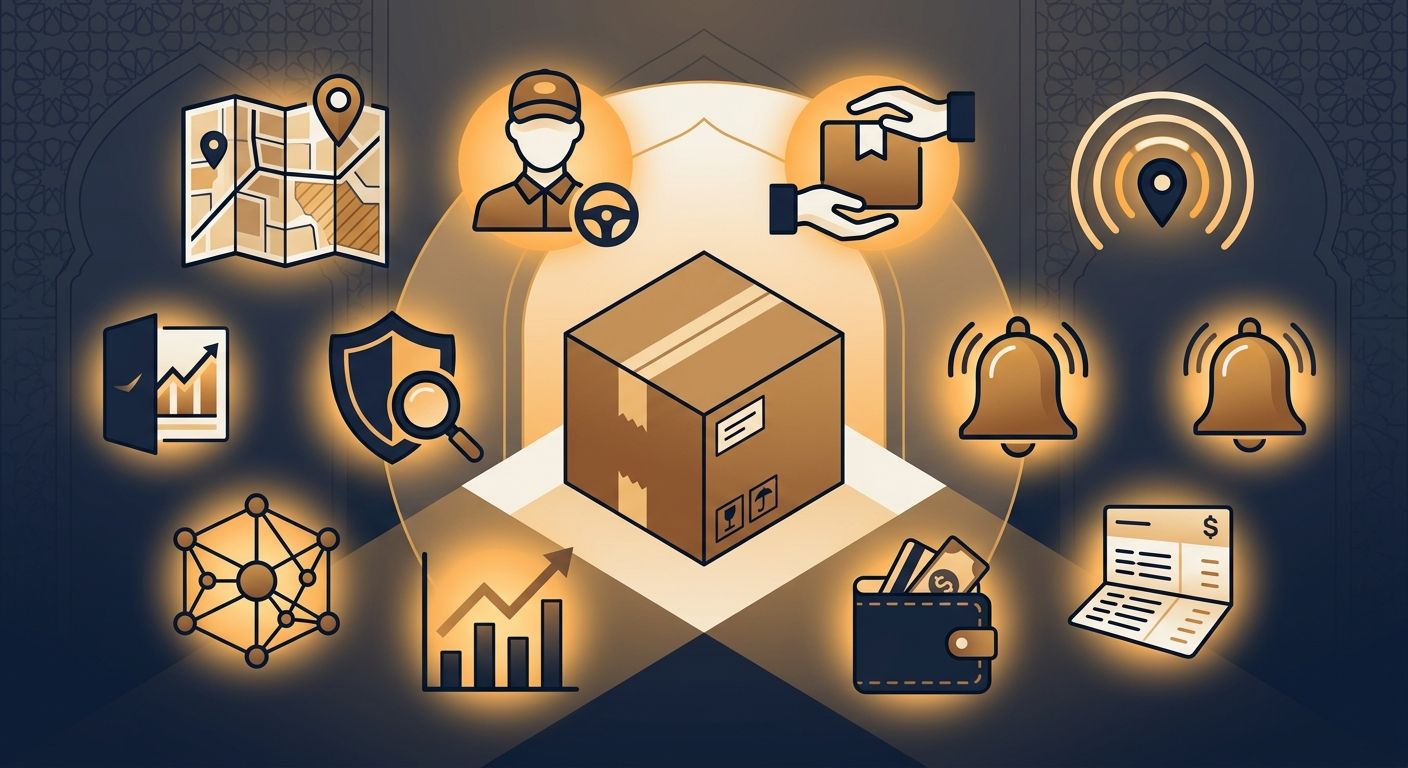
A successful shipping system controls the complete order-to-settlement workflow. In the fast-growing logistics landscape of the Middle East and North Africa (MENA), where Cash-on-Delivery (COD) remains the dominant payment method, shipping operations are as much about financial management as they are about moving physical parcels. A robust [logistics erp system](https://www.shiprexnow.com) must bridge the gap between field operations and back-office accounting, ensuring that every parcel's physical journey is mirrored by an immutable financial record. This guide explores the twelve essential features of a modern shipping platform, detailing how they function, where they commonly fail, and how to structure them for maximum operational integrity.
Once an operator understands the structural demands of last-mile logistics, the first operational challenge is establishing how orders enter the system.

1. Flexible order capture
Merchants onboard and submit shipments in diverse ways. Some prefer manual web forms, others paste bulk text, upload massive Excel sheets, or connect storefronts directly via APIs. A premier shipping erp software must accommodate all these channels without fracturing the order's identity or corrupting the downstream workflow.
The most common operational failure mode in order capture is "data drift." This occurs when an order imported from a spreadsheet bypasses the validation and pricing rules applied to manual entries, leading to unpriced shipments, missing contact details, or duplicate orders. To prevent this, platforms like Shiprex route every capture channel through a single validation engine. Whether a merchant enters a single package or uploads a thousand-row spreadsheet, the system enforces the same field requirements, normalizes addresses, and automatically computes delivery fees before the order is saved. This ensures that the best shipping erp experience is consistent for both the administrative staff and the self-service merchant.
Once orders are successfully captured, the system must immediately calculate the cost of delivery based on where the parcel is going.
2. Explainable zone pricing
Pricing in logistics is inherently geographic and contract-driven. A modern shipping management system must resolve complex, multi-tiered pricing structures instantly. This requires hierarchical zones (such as country, governorate, and district) that support default rates, merchant-specific contract overrides, and driver payouts.
A frequent failure mode is the "free-typed city" problem. When a merchant uploads a spreadsheet containing "Cairo - Nasr City" while the system only recognizes "Cairo," the order is often left unpriced or requires manual correction. Shiprex addresses this with live fuzzy city matching and an integrated AI service that generates plausible alternative spellings and synonyms for zones, allowing the system to learn and resolve messy addresses over time. Furthermore, with the newly shipped branch management capabilities, these zones can be scoped to specific regional branches. This allows a multi-country operator to price same-name cities in their native branch currencies without risk of collision or manual conversion errors.
With pricing established, the system must then differentiate between the various logistical paths a parcel can take.
3. Multiple service types
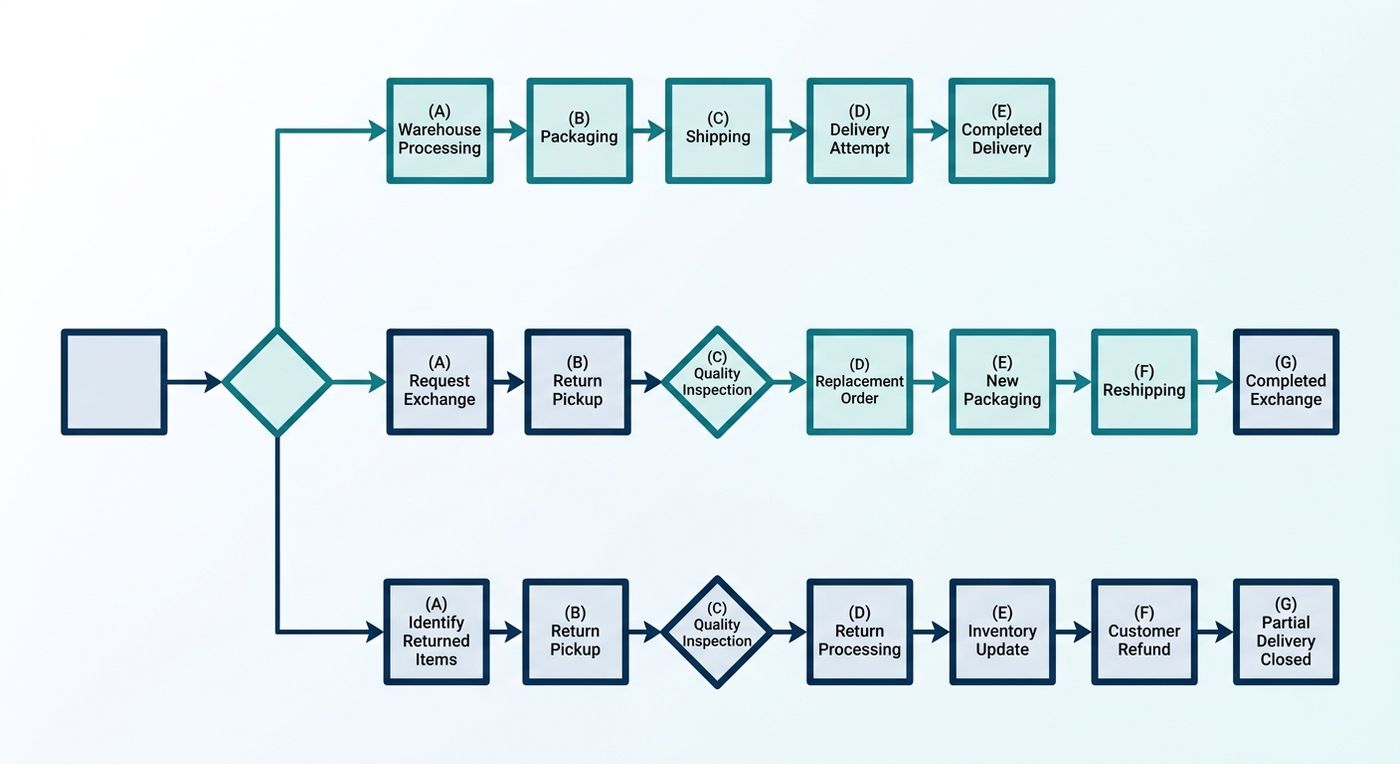
Last-mile delivery is rarely a straight line. Beyond standard forward deliveries, couriers must handle exchanges, cash-only collections, customer return pickups, and refunds. Each service type carries unique logistical and financial rules that must be governed by the same core engine.
The operational failure mode here is treating these variations as separate, disconnected orders, which scrambles inventory counts and merchant balances. For example, an exchange order requires the driver to deliver a new item while simultaneously collecting a return item, which must then be tracked back to the warehouse. Shiprex solves this by modeling these as native order types on a single record, allowing them to reuse the core pricing and routing engines. Additionally, the platform's upcoming item-level, stock-backed partial delivery workflow introduces a robust reverse-logistics process: if a customer accepts only part of an order, the un-kept items are automatically converted into a return order, with stock levels adjusted dynamically as the goods flow back to the warehouse.
Executing these diverse service types in the field requires a highly accountable and connected workforce.
4. Driver accountability
Drivers are the physical touchpoint of the business and the primary handlers of cash. A successful delivery management system must treat drivers as first-class operational entities rather than generic user accounts. They require a focused, mobile-friendly interface—such as Shiprex's secure online driver portal, gated by one-time passwords (OTP) or secure hash links—to manage their daily runs.
The critical failure mode in driver management is "permission creep," where drivers are allowed to make sensitive status changes that should be reserved for the back office. To mitigate this, operators must enforce restricted status-update permissions, allowing drivers to mark a parcel as "Delivered" but preventing them from marking it as "Collected" (which triggers financial settlement). For companies with existing mobile applications, Shiprex maintains its legacy driver app API to ensure uninterrupted field operations while the web-based portals continue to modernize.
Before a driver can deliver a parcel, however, the courier must first collect it from the merchant.
5. Structured pickups
The first mile is just as critical as the last. A pickup request is not merely a task; it is a commitment that requires an owner, a status, a deadline, and an exception path.
The common failure mode here is "capacity flooding," where merchants book unlimited, short-notice pickups, overwhelming the driver fleet and leading to missed collections. To prevent this, a successful fleet management software must enforce strict booking windows, daily caps, and scheduling rules. Shiprex allows operators to configure these limits per merchant, while also supporting zone-based pickup pricing and automated driver assignment based on geographical proximity. By structuring pickups with a dedicated status history (from Pending to Picked Up), the back office gains complete visibility into the collection pipeline before the parcels even reach the sorting facility.
Once parcels are collected and brought to the warehouse, their status must be governed with absolute precision.
6. Governed status changes
In last-mile logistics, status is everything. Every transition must follow a strictly authorized lifecycle and emit an auditable event.
A major failure mode in legacy systems is "status bypassing," where a user or an external API directly edits the database to mark an order as "Collected" without running the necessary financial checks, resulting in unaccounted cash. To prevent this, a modern courier management software must route all status updates through a single, secure code choke point. Shiprex enforces this via a central update function that validates the transition against an explicit state graph (e.g., blocking an order from jumping directly from "On Route" to "Collected" without being marked "Delivered" first). This choke point guarantees that every status change triggers its downstream side-effects—such as customer SMS alerts, inventory updates, and ledger postings—consistently and without exception.
While the back office governs these statuses, the recipient must be kept informed of the parcel's progress.
7. Recipient tracking
The end customer demands immediate, frictionless visibility into their shipment's progress. Forcing recipients to register an account or download an app just to track a package is a significant operational failure mode that increases support tickets and degrades the customer experience.
A successful system must provide a public, secure tracking page that requires only the tracking ID and the recipient's phone number to verify identity. To protect merchant privacy, the system should obfuscate internal database IDs. For instance, Shiprex applies a large numerical offset to all public-facing tracking numbers, preventing competitors or malicious actors from guessing daily order volumes or scraping sensitive delivery data, while still displaying the real-time operational truth to the legitimate recipient.
Frictionless tracking must be paired with proactive, automated messaging to ensure successful delivery.
8. Status-based communications
Proactive communication is the most effective way to reduce delivery failures. When a parcel's status changes, the system should automatically notify the recipient through SMS, email, or in-app alerts.
The failure mode here is "out-of-order messaging," where a delayed notification reaches a customer after the driver has already left, causing confusion. By tying communications directly to the central status event, platforms ensure that messages are dispatched in real time. Shiprex supports per-status SMS templates through integrated gateways, transactional emails via Brevo, and internal notifications. While advanced capabilities like predictive delivery-time windows are planned on the product roadmap, the live system focuses on executing reliable, template-driven automated messaging that keeps the recipient aligned with the driver's actual progress.
Once communication is complete and the driver successfully delivers the parcel, the physical cash collected must be reconciled.
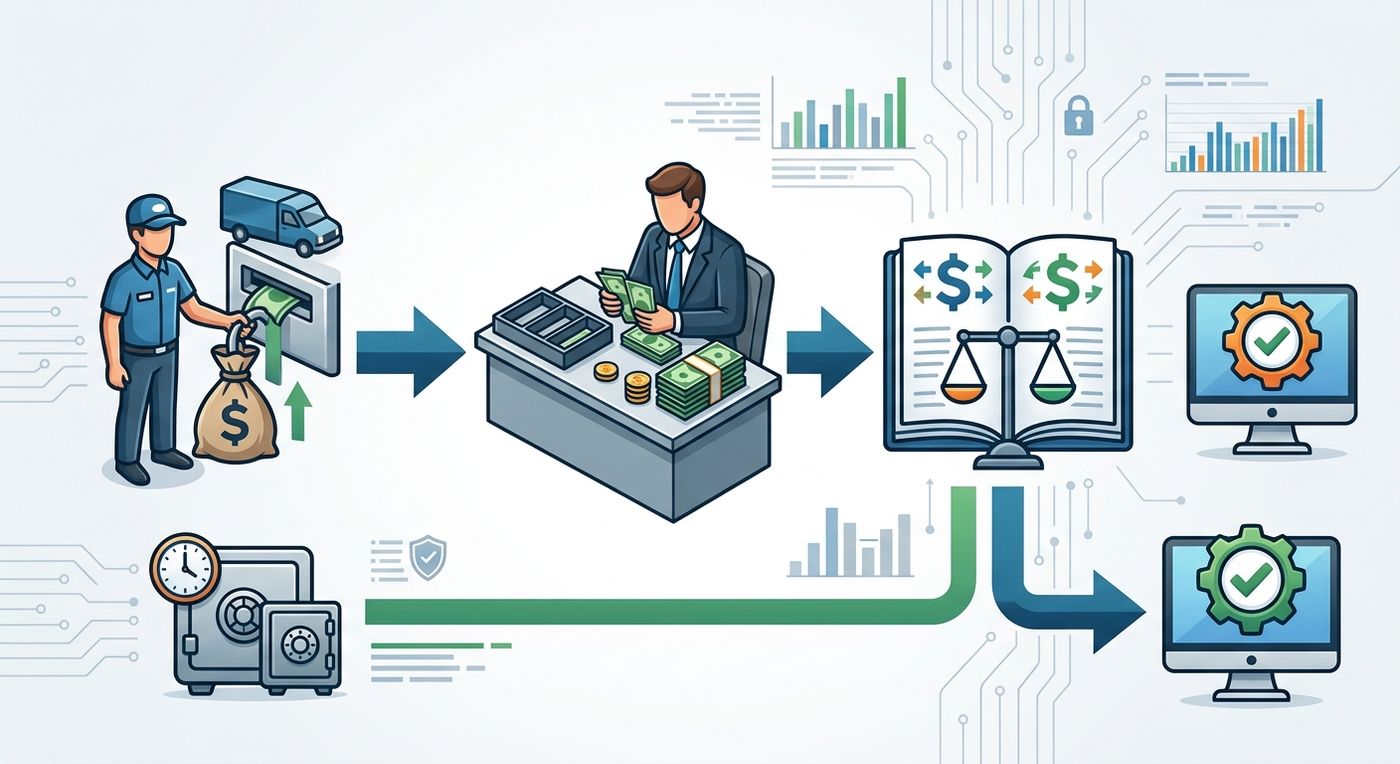
9. COD reconciliation
When drivers return to the branch at the end of the day, reconciling physical cash is the ultimate test of a logistics system. The legacy method of summing up signed transaction rows is highly vulnerable to human error and deliberate tampering.
To establish absolute financial integrity, a modern system must implement a two-phase hand-off ritual. Shiprex is currently rolling out its General Ledger v2 (GL v2)—a true double-entry system that coexists with the legacy database during transition. Under this model, cash movement requires a formal declaration by the driver, followed by a physical count and split-tender confirmation (cash, bank transfer, or e-wallet references) by the accountant. If the counted cash deviates from the ledger's expected amount, the variance is blocked and routed to a manager's approval queue, enforcing a strict four-eyes principle where no accountant can approve their own cash discrepancies.
Reconciling the driver's cash is the prerequisite for settling the merchant's account.
10. Merchant settlement
Once cash is reconciled, the courier must settle the merchant's share. An open-to-closed invoice lifecycle is essential to track what is owed, what has been deducted in fees, and what has been paid.
In a standard system, this is often calculated on the fly, leading to slow page loads and discrepancies. Shiprex's GL v2 treats the merchant's wallet as a first-class liability account within the double-entry ledger. Closing a merchant's invoice automatically triggers fee recognition and posts a balanced journal entry. The actual disbursement is handled via a payout hand-off that records the exact source accounts and reference numbers (such as bank transfer IDs). This prevents "phantom payouts" and ensures that the merchant's wallet balance is a live, auditable ledger fact rather than a re-summed database query.
With operations and finances reconciled, the business requires high-level reporting to measure success.
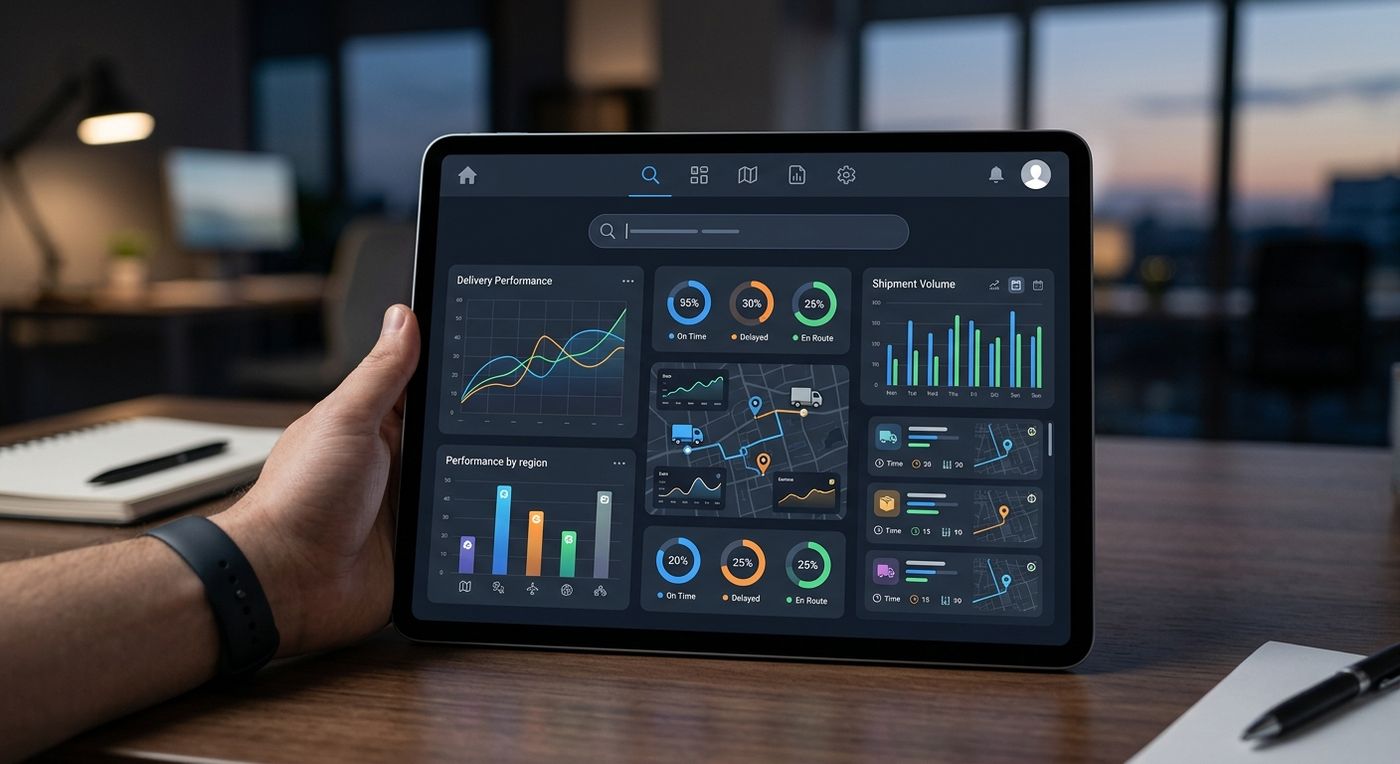
11. Reporting and exception queues
Managing a shipping operation requires clear visibility into performance metrics and unresolved issues. Standard dashboards must track daily delivery volumes, first-attempt success rates, and driver utilization.
However, the modern frontier of logistics reporting lies in self-service analytics. To address this, Shiprex has backend-shipped its flagship Magic Reporting engine—an AI-powered prompt-to-dashboard tool (with the React frontend currently in development). This engine allows administrators to type natural-language questions (e.g., "show me driver performance in Cairo") and instantly generates the correct read-only SQL query, data table, and interactive chart. By utilizing a curated semantic dictionary, the AI learns the platform's specific schema quirks, ensuring highly accurate, safe, and cached reports without requiring custom development. To maintain strict security, this feature is restricted to administrators in its initial phase.
All of these operational and financial capabilities must rest on a secure, scalable technical foundation.
12. APIs, audit, and safe scale
To support long-term growth, a shipping platform must scale safely without requiring a separate codebase for every new customer. This demands a robust API-first architecture, granular permissions, and a comprehensive audit trail.
Shiprex's API v2 uses stateless JWT authentication and a server-driven UI model, where the backend dynamically describes form fields, table columns, and allowed actions based on the user's role and active plugins. Every single edit is backed by a multi-layered audit system: an order-level action log, a global logger table capturing before-and-after states, and a revisions plugin that maintains a full version history with one-click rollback capabilities.
Deeper TMS, routing, fleet intelligence, Lighthouse, fintech, and agentic operations are roadmap direction until their gates and releases are met. Ask the vendor to demonstrate every live capability with your sample orders, including a failed attempt, return, and COD difference.